Bedding · Materials & Sleep
How to Evaluate an Organic Mattress: Materials, Certifications, and Support
An organic mattress can promise natural materials and a more considered night’s sleep. But the label alone cannot tell you how a mattress is built, how it will feel, or whether it will suit your body. A closer look at its layers, documentation, support design, and care requirements can turn a vague claim into a practical decision.
Published October 17, 2026
Shopping for a mattress is an exercise in translating words into experience. “Natural,” “organic,” “supportive,” and “cooling” sound reassuring, but each can mean something different depending on the materials, construction, and standards behind it. The most useful question is not whether a mattress carries an appealing label. It is what the label can reliably tell you—and what it leaves unanswered.
Organic mattresses may contain layers of natural latex, wool, cotton, or other materials. Their construction varies: one model may use a latex core with a wool comfort layer, another may combine cotton batting with a spring system, and a third may include only a certified organic cover around materials that are not themselves organic. Those distinctions matter. Each layer has a job, and the whole mattress—not any single ingredient—shapes the feel and function.
Evaluating an organic mattress is therefore a process of reading beyond the headline. Ask what each layer is made from, whether a certification applies to the finished product or only a component, how the support system is designed, and whether the mattress is compatible with your sleep position and preferences. The answers offer a clearer basis for comparison than broad claims alone.
Start with the complete materials list
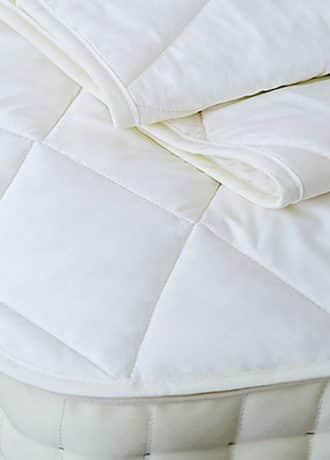
A mattress is a layered system. The cover touches the sleeper, comfort layers soften pressure, and the core provides the main structure. Some mattresses also include fire barriers, adhesives, quilting, or other components that are easy to overlook when a description focuses on a single natural fiber.
Look for a materials disclosure that identifies each layer and, where possible, its location and thickness. “Made with organic cotton” is not the same as “made entirely from certified organic materials.” A cotton cover may be organic while the foam beneath it is conventional. That is not automatically a flaw, but the distinction should be clear enough for a reader to understand what they are choosing.
When details are missing, ask the manufacturer directly. Useful questions include: What is the composition of the comfort layers and support core? Are there synthetic materials, adhesives, or chemical finishes? Does “organic” refer to the raw fiber, the finished textile, or the full mattress? Can the maker provide certification documents or a precise scope statement?
Specific answers help separate meaningful disclosure from decorative language. They also make it possible to compare products on a like-for-like basis. A mattress built mostly from natural materials may still include some synthetic components; a responsible description should make that legible rather than asking customers to infer it.
What common mattress materials do
Natural latex: resilient contouring
Natural latex is made from rubber tree sap, processed into a resilient foam. In a mattress, it can provide cushioning while retaining a springy, responsive feel. It generally rebounds more quickly than slow-response memory foam, so changing position may feel easier. The precise sensation depends on the latex formulation, firmness, thickness, and the layers above and below it.
“Natural latex” is not a complete description of a mattress. Ask whether the latex is blended with synthetic material, how thick the layer is, and whether it forms the comfort layer or the support core. Latex mattresses can also be heavy, and some constructions are difficult to move or rotate. People with a latex allergy should seek qualified medical advice and request clear information about materials and exposure rather than relying on a broad marketing assurance.
Wool: cushioning and a barrier layer
Wool may be used in quilting, comfort layers, or as part of a fire barrier. It can add a soft, springy surface and is valued for its ability to interact with moisture and warmth. The amount and placement matter: a thin wool layer under the cover will not make a mattress behave like a thick wool comfort system.
Ask how the wool is processed, where it appears in the mattress, and what care instructions apply. Natural fibers still need maintenance, and claims about temperature regulation should be treated as descriptions of material behavior—not guarantees that every sleeper will feel cooler or warmer.
Cotton: a familiar cover and padding fiber
Cotton commonly appears in mattress covers and quilted layers. Its feel depends on the weave, finishing, and construction around it. A cotton cover can be pleasant to the touch, but it does not by itself determine the mattress’s support or establish that the entire product is organic. Check whether the cotton is certified, whether the cover is removable, and whether the manufacturer permits washing.
Springs and other structural components
Some mattresses combine natural-fiber comfort layers with steel coils. Coil count alone is an incomplete measure of quality. Coil design, zoning, gauge, layout, and the mattress’s overall construction affect support and movement. Ask how the system is arranged and whether the manufacturer explains its expected use and care.
Also look for materials that may sit between the layers: fabric scrims, adhesives, flame-resistant barriers, or edge reinforcement. A full materials account need not be complicated, but it should be transparent enough to show what the mattress actually contains.
Read certifications for what they verify
Certifications can help make a complicated supply chain easier to understand. They are most useful when you know which organization issued the certification, what standard it covers, and which part of the mattress is included. A mark is not a universal verdict on comfort, durability, health outcomes, or environmental impact.
Some standards address whether agricultural fibers meet defined organic-production requirements. Others assess chemical emissions, restricted substances, or manufacturing practices. A certificate may apply to a textile, a material, a facility, or a finished product. Those are different scopes. A certified cover does not automatically certify the foam or the entire mattress.
Before relying on a certification, check the wording and documentation. Look for the certificate holder, product or component name, standard, scope, and validity dates. If a brand uses a certification logo but does not identify what it applies to, ask for clarification. Genuine documentation should make the boundary of the claim easier to see.
Certifications also do not answer every practical question. They cannot tell you whether a mattress will feel too firm, whether its edges will suit your habits, or whether it will hold up under your household’s use. Think of them as one part of the evidence—not a replacement for testing the mattress, reviewing the construction, and understanding the warranty.
- Check the scope: Does the certificate cover the whole mattress, a specific material, or a manufacturing site?
- Confirm the exact product: A certification for a supplier or material does not necessarily apply to every product made by a brand.
- Look for current documentation: Standards and certificates can change; the details should be verifiable and up to date.
- Separate environmental claims from performance: A certification does not establish that a mattress is comfortable or long-lasting for you.
Support is personal, not a number on a tag
Support is often treated as a synonym for firmness. The two are related, but they are not the same. Firmness describes the initial feel at the surface; support concerns how the mattress holds the body in a comfortable, reasonably aligned position. A very firm mattress can still create pressure, while a softer mattress may feel supportive to someone whose body and sleeping position suit it.
Sleeping position offers a useful starting point. Side sleepers often pay close attention to cushioning at the shoulders and hips. Back sleepers may want a surface that feels balanced beneath the lower back and pelvis. Stomach sleepers may prefer less sink, though individual comfort varies. Combination sleepers should consider how easily the mattress allows them to move between positions.
Body shape, weight distribution, personal sensitivity, and the bed’s foundation all influence how a mattress feels. So does the construction itself: two mattresses described as “medium” may have entirely different surface response and support. Use firmness ratings as a rough guide, not a measurement that guarantees a particular result.
If possible, try the mattress in a way that resembles your ordinary sleep posture. Spend enough time to notice whether pressure builds at your shoulders or hips, whether your midsection feels unsupported, and whether turning over requires effort. A brief showroom test cannot reproduce a full night, but it can reveal obvious mismatches.
For online purchases, examine the sleep-trial policy closely. Find out when the trial begins, whether a minimum break-in period applies, how returns are arranged, and whether fees or pickup conditions exist. A generous-sounding trial is only useful if its terms are workable and clearly stated.
Consider the bed as a system
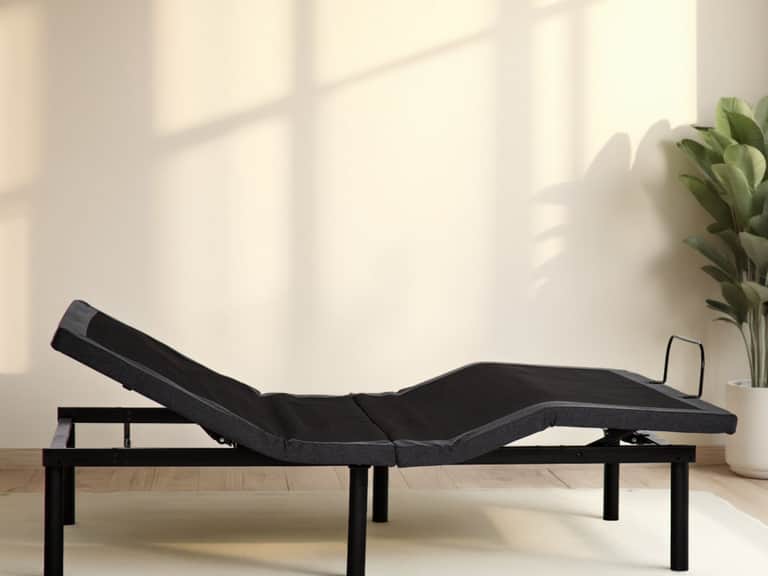
A mattress does not work in isolation. Its foundation can affect feel, ventilation, warranty eligibility, and stability. Before buying, check the manufacturer’s requirements for a platform, slatted base, box spring, or adjustable base. Confirm slat spacing and weight limits where relevant. A surface that is too flexible or uneven may undermine the mattress’s intended support.
Temperature comfort also depends on more than the mattress materials. The room climate, sleepwear, sheets, duvet, and number of people sharing the bed all contribute. Natural fibers may offer particular tactile or moisture-management qualities, but no material can guarantee a cool night in every environment. If you tend to overheat, assess the complete sleep setup instead of treating a “cooling” label as a cure-all.
For shared beds, consider motion transfer, edge feel, and whether each sleeper can settle comfortably. A mattress that suits one person may not meet the other’s needs. If the manufacturer offers split firmness options or separate comfort layers, verify how these are constructed and whether they remain compatible with the selected bed frame.
Durability, maintenance, and ownership costs
Natural materials are not automatically durable, and synthetic materials are not automatically short-lived. Longevity depends on material quality, layer thickness, construction, use, and care. Ask what the warranty covers, how long it lasts, and which conditions may void it. A warranty may address specific defects without promising that the mattress will retain its original feel indefinitely.
Read the care instructions before purchase. Some mattresses should not be folded, flipped, spot-cleaned with particular products, or exposed to moisture. A removable cover may simplify cleaning, but confirm whether it is washable and how it must be handled. If the mattress cannot be flipped, find out whether it should be rotated and how often.
Account for delivery, setup, removal of an old mattress, and return costs. These details may seem secondary beside material claims, but they are part of the real purchase. A mattress that is extremely heavy may also be harder to move or maintain, especially in a small home or a room with narrow stairs.
Price is not a reliable shortcut to quality. A higher price may reflect more expensive materials, specialized construction, or brand positioning. It does not establish that the mattress is the right fit or that every component is certified. Compare disclosed construction, support, trial terms, warranty, and expected care alongside the price.
A practical comparison checklist
When several mattresses appear similar, use the same questions for each. Consistent comparison reduces the pull of polished descriptions and helps expose where information is missing.
- Is every major layer identified, including the cover, comfort layers, support core, and fire barrier?
- Does the maker specify which materials are organic and which certification verifies that claim?
- Are certifications tied to the exact product or component being considered?
- Does the mattress feel appropriate for your sleeping position, preferred firmness, and pressure sensitivity?
- Is the mattress compatible with your foundation, bed frame, and any adjustable base you plan to use?
- Are trial, return, delivery, warranty, and care terms available in clear language?
- Can the manufacturer answer questions about materials, construction, and maintenance without relying solely on broad marketing phrases?
A clear “not disclosed” is itself useful information. It tells you where a comparison cannot be made confidently. You may decide that the missing detail is not essential to your priorities, or you may decide that a better-documented option is preferable. Either way, the choice is informed rather than assumed.
Common misconceptions to leave behind
“Organic” means every part is organic. Not necessarily. The word may describe a particular fiber or certified component. Verify the scope rather than extending a claim beyond what its documents support.
“Natural” means chemical-free. Natural materials are still processed, and mattresses may contain multiple materials and treatments. Ask for specific composition and certification information instead of treating “natural” as a complete chemical disclosure.
More certifications mean better sleep. Certifications can provide meaningful information about defined standards, but they do not measure personal comfort. A well-documented mattress can still be the wrong firmness or feel for a particular sleeper.
A firmer mattress always provides better support. Support and firmness are not interchangeable. The best match depends on the sleeper and the mattress’s construction. Comfort and alignment should be considered together.
Natural materials always sleep cooler. Temperature experience depends on the full mattress, bedding, room, and individual. Material properties can inform expectations, but they cannot predict every person’s night.
The bottom line
An organic mattress is best evaluated as a complete object, not a slogan. Start with a layer-by-layer materials disclosure. Understand what any certification covers. Then turn to the questions that govern daily use: Does the mattress support your preferred sleeping position? Does its surface feel comfortable? Is it compatible with your bed base, and can you live with its care requirements and return terms?
There is no single material or certificate that can answer all of those questions. Natural latex, wool, and cotton each contribute particular qualities, but construction determines how they work together. A careful comparison does not promise perfect sleep; it helps make the choice more transparent, personal, and grounded in evidence.
That is the value of looking beyond the label. The right mattress is not simply the one with the most impressive claims. It is the one whose materials are clearly described, whose support suits the sleeper, and whose practical terms hold up after the first night.
Frequently asked questions
What should I look for in an organic mattress?
Begin with a complete materials list, then check which components are certified and what each certification covers. Assess comfort, support, foundation compatibility, care instructions, trial terms, and warranty as part of the same decision.
Does a certified organic cover mean the whole mattress is organic?
No. A certificate may apply only to a fabric or other specific component. Look for documentation that identifies the certified material and the scope of the claim.
Is natural latex a good choice for every sleeper?
Not necessarily. Latex can feel resilient and responsive, but comfort depends on firmness, thickness, construction, and personal preference. Sleepers with a latex allergy should seek appropriate medical guidance and clear material information.