Comforters provide an insulating layer within a bedding system, helping maintain a comfortable sleep temperature across changing seasons. Their warmth depends on fill material, weight, construction, and the sleeper’s preferences. A lightweight comforter can suit warmer rooms or people who prefer less insulation while remaining distinct from sheets and decorative bedding.
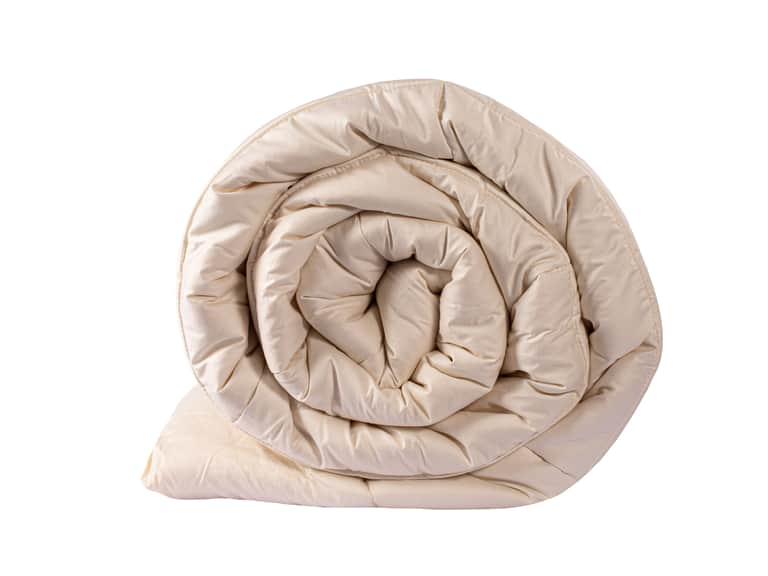
The Sleep and Beyond myMerino Wool Comforter Light uses Merino wool fill, a natural fiber valued for breathability and moisture management. Its lighter insulation is intended to provide gentle warmth without the heavier feel of a high-loft comforter. This construction may be relevant to sleepers who tend to overheat or prefer a less bulky covering.
Wool fibers can help buffer fluctuations in warmth by absorbing and releasing moisture vapor, supporting a more balanced sleep environment. The myMerino Wool Comforter Light is designed around these properties, with a lighter weight for moderate insulation. Care instructions and material details should be checked for proper maintenance and compatibility with individual sensitivities.
Comforters are often used directly over a top sheet or inside a duvet cover, depending on personal preference and household care routines. Coordinating bedding elements such as pillows and sheets can support a consistent sleep setup, while duvet covers provide a removable outer layer. Comforter weight and dimensions are useful considerations when selecting compatible bedding.
When comparing comforters, consider fiber content, warmth level, construction, and the climate of the sleeping space. Natural-fiber options may appeal to people evaluating bedding alongside organic mattresses, though certifications and sourcing standards vary by product. The lightweight Merino design offers an alternative to heavier fills for those seeking breathable, moderate insulation.
 Bedding